Music Streaming Site Comparison for New Release Alerts, Genre Discovery, and Personalized Playlists
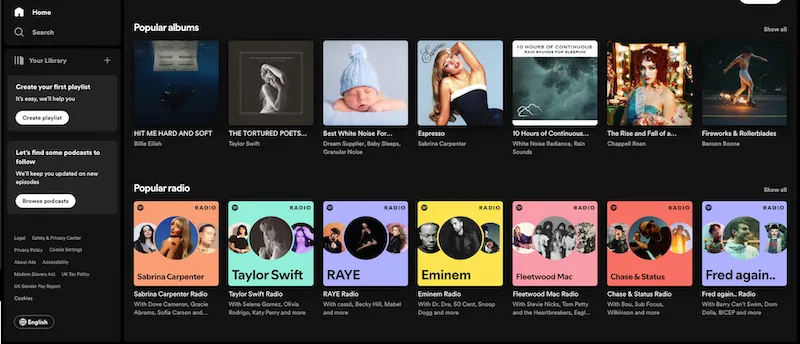
A music service can have almost every song you already know and still be poor at helping you discover what was released this week. Another service may generate excellent personalized playlists but repeatedly recommend the same familiar artists when you search a broad genre.
Spotify, Apple Music, and YouTube Music currently take noticeably different approaches to new-release tracking and discovery. Spotify combines followed-artist feeds with Release Radar, Discover Weekly, editorial playlists, and increasingly adjustable discovery controls. Apple Music combines favorite-artist notifications with editorial genre browsing and recommendations influenced by favorites, listening history, and “Suggest Less” feedback. YouTube Music combines recommendations with the wider YouTube listening history, an Activity Feed, short-form Samples, artist pages, and direct controls for removing unwanted artists from recommendations.
The best service therefore depends on whether your priority is never missing releases from artists you already follow or regularly finding music outside your current library.
New Release Alert Coverage and Delivery Timing
New-release notifications should be tested by release type, not simply marked “supported.”
Spotify's What's New system tracks recent releases from followed artists. Spotify says following an artist helps users avoid missing new releases, while its What's New feed retains recent notifications for up to 60 days. Followers can also encounter releases through Release Radar.
Release Radar has narrower rules than the general concept of “everything involving this artist.” Spotify states that it includes songs where the artist is a main or featured artist, but not merely the remixer. The playlist refreshes every Friday rather than operating as an instant notification for every individual release.
Spotify updated Release Radar again in July 2026. It now combines releases from artists the listener already likes with personalized new singles and is rolling out controls that can focus the playlist on new-to-you artists, specific genres, editorial picks, or other recommendation categories.
Apple Music uses the Favorite relationship more directly. Apple states that subscribers who mark an artist as a favorite automatically receive notifications when that artist releases new music.
YouTube Music uses several routes. Its Activity Feed shows new releases from artists the user follows, while artist pages contain their current new-release section. Some pre-release music promoted through Shorts can also provide a Notify me option, but Google notes that this function depends on the label or distributor enabling it.
A useful accuracy test uses at least five followed artists and records:
Do this for several releases over a month. A service that alerts perfectly for albums but misses guest appearances may still be unsuitable if collaborations are what you follow most closely.

Genre Depth and Discovery Paths
A genre button is not the same as deep genre discovery. Spotify supports ordinary genre and mood browsing and also allows advanced desktop searches combining genre and year, such as filtering metal releases from a particular year. Its personalized Mixes can also be generated around artists, moods, genres, and decades.
Spotify's editorial system adds another layer. Fresh Finds currently includes more than a dozen genre-specific discovery lists, while Discover Weekly allows users to select several genres based on their listening history. The July 2026 Release Radar update also adds genre-focused session controls.
Apple Music provides genre, mood, and activity categories and combines them with editor-selected playlists, albums, artists, songs, and radio programming. Apple Music Classical is additionally designed around a more specialized search and browsing structure for classical music, where composer, work, recording, and performance distinctions matter more than an ordinary pop-music search.
YouTube Music's Explore section covers current releases, genres, playlists, and regional popular music, while its Home recommendations can be filtered by categories reflecting mood or activity. Samples provides an endless personalized stream of short music segments mixing new releases with older material.
The best genre test should therefore use specific queries rather than broad labels.
Instead of testing only:
Jazz
also test:
Japanese jazz fusion
1990s trip-hop
Korean city pop
Detroit techno
Brazilian funk
Then record the first 20 results:
already-known artists
new-to-you artists
recent releases
older catalog
editorial playlists
user playlists
A search page that returns twenty familiar mainstream songs may technically support the genre while providing little discovery value.
Image placement: after this section
Image search key: music streaming genre mood decade discovery playlist comparison
Alt: Music discovery comparison using genre, subgenre, era, mood, and personalized playlist filters
Recommendation Learning Over Time
Personalized recommendations should not be judged during the first day of using a service.
Spotify states that its playlist recommendations use behavior including listening, liking, sharing, saving, and skipping, along with behavior from listeners with similar tastes. Its Taste Profile is an interpretation of what the user listens to and how they listen, and it affects surfaces such as Discover Weekly and Home.
Apple Music similarly uses listening behavior for recommendations. Users can favorite music, use Suggest Less, or turn off listening history entirely when they do not want particular listening sessions influencing future suggestions. Apple says these choices affect personalized recommendations and Replay.
YouTube Music combines signals from YouTube Music with relevant listening behavior from the wider YouTube ecosystem. Google says recommendations can depend on current mood, activity, listening history, subscriptions, liked content, and other feedback.
This means the initial recommendation test and the mature recommendation test should be separated.
Day 1
Record the first 30 recommendations without deliberately training the account.
Days 2–14
Choose five artists to play frequently.
Like approximately 20 songs you genuinely enjoy.
Skip songs that do not fit.
Avoid repeatedly playing background music that does not represent your normal taste, or exclude it from recommendation influence where the platform permits.
Day 15
Record another 30 recommendations.
Then calculate:
new artists discovered
songs already in library
repeated artists
unwanted genres
songs saved after discovery
The strongest personalization system is not necessarily the one that changes fastest. A system that overreacts to one unusual listening session can be less useful than one that adjusts more gradually.
Recommendation Controls and Exclusion Options
Direct recommendation controls matter when personalization gets stuck.
YouTube Music currently provides unusually explicit artist-level controls. Users can select Not interested for individual recommendations or Don't recommend artist/channel for an unwanted source. Google also lets users manage and delete that feedback later.
YouTube Music recommendations can also be adjusted by changing subscriptions, removing liked material, and managing listening history.
Apple Music offers Favorite, Dislike, and Suggest Less controls on supported interfaces. It also allows listening history to be disabled, which prevents those listening sessions from shaping recommendations.
Spotify provides a different type of control. A playlist or individual track can be excluded from the Taste Profile, causing past and future listening from that source to have less influence on recommendations. Spotify warns that some surfaces, including Discover Weekly, may not reflect the exclusion until their next update cycle.
Spotify's Autoplay can also be switched off when the listener does not want related tracks automatically inserted after an album or playlist ends.
As of July 2026, Spotify also offers more direct control inside discovery playlists themselves. Release Radar can be narrowed toward new artists, selected genres, editorial picks, and other listening directions, while Discover Weekly supports selectable genre preferences.
A useful control comparison is:

Familiar-Music Playback and Discovery Value
A subscription becomes easier to evaluate when discovery is separated from ordinary playback.
Spotify currently has both free and Premium listening. Premium adds ad-free music, offline music downloads, higher-quality playback options, and greater playback control. Spotify's current Premium offering in supported markets also includes lossless playback up to 24-bit/44.1 kHz, although features can vary by market.
Spotify Free remains useful for testing the recommendation system before subscribing, but users who want complete control over albums, offline listening, and uninterrupted music receive more practical value from Premium.
YouTube Music currently provides a relatively capable ad-supported service. Google says free users can use on-demand song and music-video playback, queues, repeat, unlimited skipping, Samples, and Music Tuner. Premium adds ad-free music, background playback for music, audio-only playback, and music downloads.
YouTube Music Premium's highest documented audio-quality setting is currently 256 kbps AAC or Opus.
Apple Music takes a different approach because its full streaming product is subscription-based rather than supported by a permanent equivalent of Spotify Free or YouTube Music's ad-supported music tier. Subscribers receive ad-free listening, offline downloads, personalized recommendations, lossless audio, and Dolby Atmos where supported.
This produces different value profiles.
For playing an established personal library
Apple Music is particularly attractive when lossless playback, album-oriented listening, offline storage, and integration with an existing Apple music library matter more than aggressive discovery. Its favorite-artist notifications and editorial genre browsing still provide discovery without making it the entire experience.
For algorithmic discovery
Spotify currently provides the most structured collection of recurring discovery surfaces: Release Radar, Discover Weekly, Fresh Finds, New Music Friday, genre Mixes, editorial playlists, and new 2026 controls that deliberately bias discovery toward unfamiliar artists or selected genres.
YouTube Music is attractive when music videos, official artist channels, Samples, regional trends, and the broader YouTube listening ecosystem matter. Its artist-level recommendation exclusion also gives users a direct way to remove persistent unwanted sources.
Thirty-Day Discovery Comparison
A repeatable test is more valuable than judging three services after several hours.
Follow the same ten artists on each service.
Then use each account normally for 30 days and record:
For genre testing, repeat the same five narrow search terms once a week and count how many new releases or unfamiliar artists appear.
For recommendation testing, save only music you genuinely want to hear again. Otherwise the experiment becomes self-contaminating.
The purpose is not to find the service with the largest theoretical catalog. It is to find the one that consistently surfaces music you would otherwise have missed.
Platform Fit by Listening Goal
The strongest current fit can be summarized without declaring one universal winner.
Spotify: strongest starting point for listeners who actively want new-artist discovery and frequently use personalized playlists. Its 2026 Release Radar and Discover Weekly controls make discovery increasingly adjustable rather than fully passive.
Apple Music: strong for listeners who primarily know what they want to hear, value lossless or Dolby Atmos playback, and prefer editorial browsing alongside personalized recommendations. Favorite-artist notifications make it possible to follow releases without depending entirely on algorithmic playlists.
YouTube Music: strong for listeners who move between songs, official music videos, artist channels, Shorts-related discovery, and less conventional music sources. Its free tier is also useful for evaluating recommendations before paying, while Premium mainly improves the playback experience through ad removal, background use, audio-only listening, and downloads.
The final selection should follow:
release-alert accuracy → genre depth → recommendation improvement → direct recommendation controls → paid playback benefits
A service that sounds excellent but repeatedly misses the artists you follow may be a poor discovery tool. A service with impressive recommendations may be unnecessary if you already know exactly what you want to play.
For long-term use, the best music platform is the one that matches how often you want the algorithm to lead you somewhere new.