Comparing the Actual Costs of Long-Term Investing and Short-Term Trading, Including Fees, Taxes, and Management Time
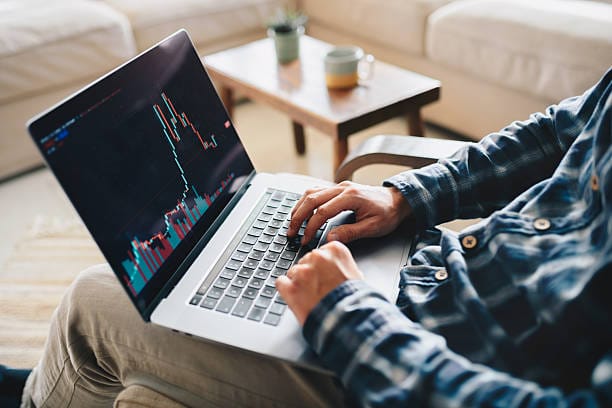
The South Korean retail investment landscape has experienced an unprecedented surge, driven by an ambitious generation of retail traders known culturally as "Gaemi" (개미 - Ants). In particular, the "Seohak Gaemi" (서학개미 - West-bound Ants) have captured global headlines by aggressively trading volatile US technology equities, single-stock options, and 3x leveraged ETFs (such as TQQQ and SOXL) in search of rapid wealth accumulation.
However, many retail traders evaluate their performance solely on gross portfolio gains, operating under the dangerous illusion that zero-commission mobile brokerages mean trading is free. In reality, high-frequency active trading in Korea suffers from severe "frictional drag." When you calculate the compounding penalties of South Korea's 22% overseas capital gains tax, foreign exchange (FX) conversion spreads, domestic securities transaction taxes, and the physical toll of trading US market hours from Seoul, active trading frequently turns what appears to be a profitable strategy into a net financial loss.
The tax advantage of long-term holding under Korean financial laws
Taxation represents the single largest friction point for Korean stock investors. The tax treatment for trading overseas equities (such as US stocks) differs fundamentally from domestic stock holdings, creating a massive structural advantage for long-term buy-and-hold investors.
The 22% overseas capital gains tax barrier
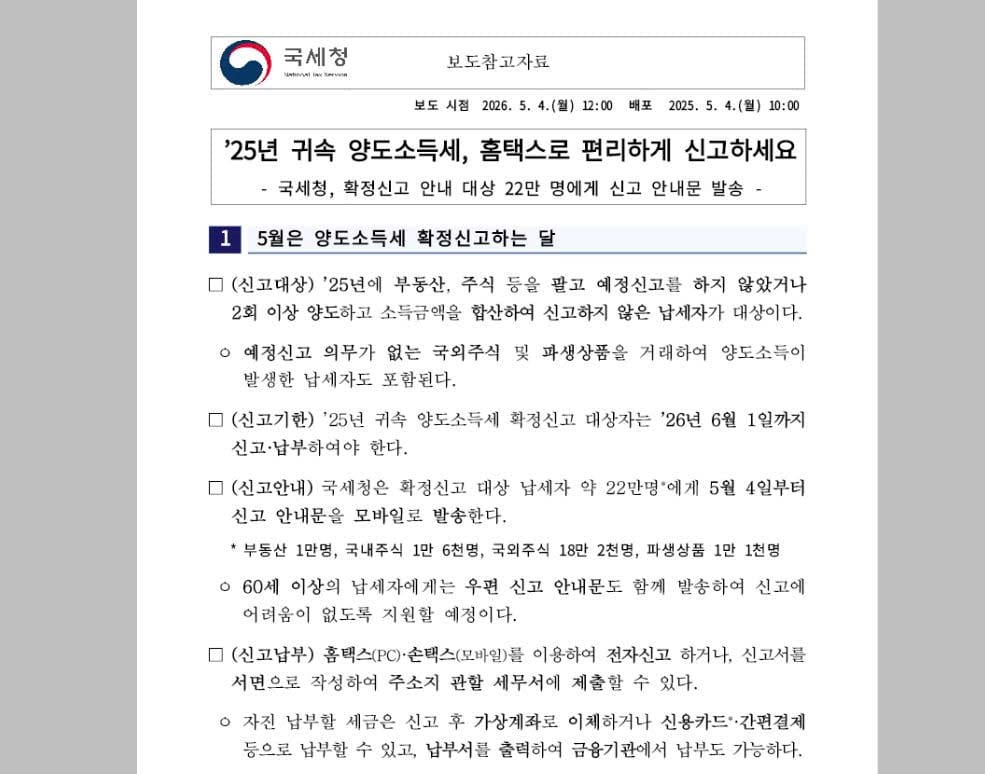
Under South Korean tax law, realized capital gains from foreign equities are subject to a flat 22% tax rate (consisting of a 20% national capital gains tax plus a 2% local income tax). This tax applies to all net realized profits exceeding the annual basic exemption limit of 2.5 million KRW (~$1,800 USD).
For active short-term traders who frequently lock in profits throughout the year, every dollar earned above the 2.5 million KRW threshold incurs an immediate 22% tax deduction. Conversely, long-term investors who hold appreciating assets without selling defer their tax liabilities indefinitely, allowing 100% of their capital to remain invested and compound over decades.
Strategic tax deduction splitting (연도별 양도세 공제)
Long-term investors can actively utilize South Korea's tax laws to harvest gains tax-free. By strategically realizing up to 2.5 million KRW in capital gains per calendar year and immediately reinvesting, a long-term investor systematically resets their cost basis upwards without paying a single Won in tax. Active day-traders who execute hundreds of trades annually cannot utilize this strategy effectively because their frequent transactions rapidly exhaust the 2.5 million KRW limit within the first few weeks of the year.
Domestic Securities Transaction Tax (증권거래세)
For retail traders focusing on domestic KOSPI and KOSDAQ stocks, day-trading incurs a direct friction point: the Securities Transaction Tax. Unlike capital gains taxes which are levied on net profits, the Securities Transaction Tax is automatically withheld on the total gross value of every sale order, regardless of whether the trade resulted in a profit or a loss. High-frequency day-trading on domestic exchanges steadily bleeds trading capital through transaction tax friction alone.
Master cost breakdown: Active trading vs. long-term investing in Korea
To visualize the total operational drag experienced by South Korean retail investors, review this master cost breakdown comparing active short-term trading against long-term index investing:
Hidden friction points: Foreign exchange spreads, slippage, and night-shift fatigue
Beyond explicit taxes, South Korean retail investors face severe operational friction points that rarely appear on standard brokerage promotional banners.
Foreign exchange spreads (환전 수수료) and currency conversion bleed
When trading US equities from South Korea, your capital must be converted from Korean Won (KRW) to US Dollars (USD). While Korean brokerages frequently advertise "90% FX fee discounts" (환전 우대율), an exchange spread still applies to every conversion.
Active short-term traders who frequently move between cash (KRW) and US equities incur FX spread costs on every cycle. Converting 10 million KRW to USD and back to KRW burns roughly 20,000 to 180,000 KRW in spread friction alone. Over a year of active trading, FX conversion bleed can easily strip 2% to 5% off a trader's total portfolio value.
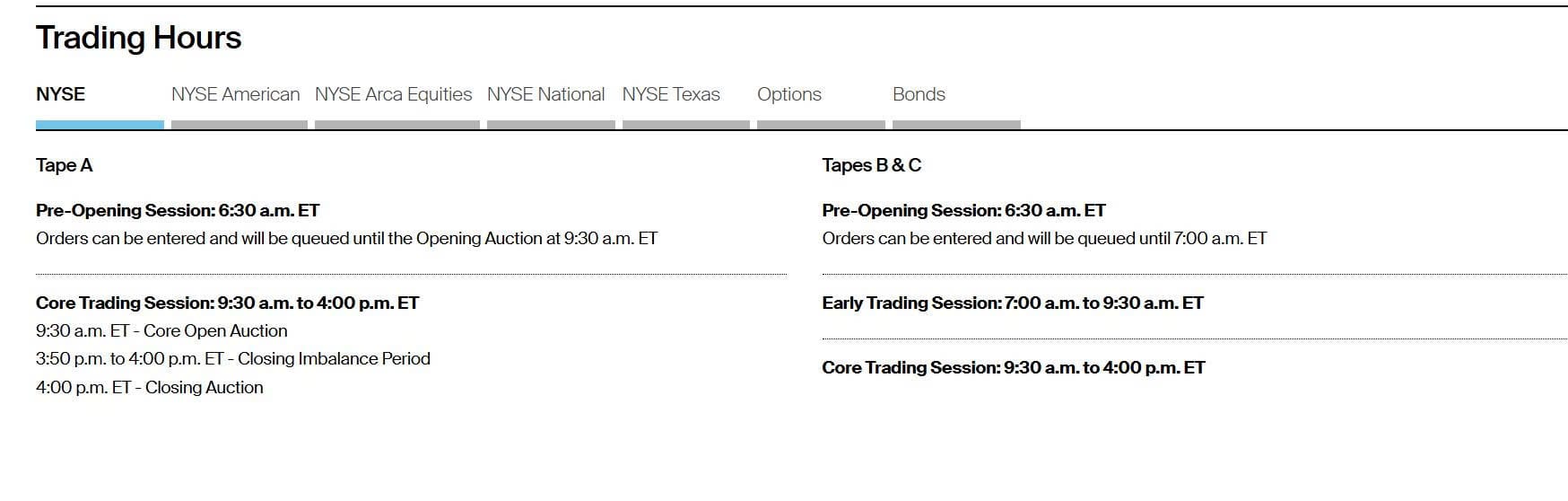
Official NYSE trading-hours page showing the core stock market session from 9:30 a.m. to 4:00 p.m. Eastern TimeThe physical opportunity cost of US market night shifts (10:30 PM – 5:00 AM KST)
Geographic location imposes a severe physical penalty on Korean "Seohak Gaemi." Due to time zone differences, regular US market operating hours run from 10:30 PM to 5:00 AM KST (or 11:30 PM to 6:00 AM during standard time).
Active day-trading or swing-trading US stocks forces Korean investors to monitor volatile price charts throughout the night while maintaining daytime jobs or family commitments. The resulting chronic sleep deprivation, elevated cortisol levels, and severe decision fatigue lead to costly behavioral mistakes—such as panic-selling during pre-market dips or emotional "revenge trading" (복수매매) to recover losses.